Pitfalls and Profits in Latin America Cross-Border E-Commerce-钛媒体官方网站

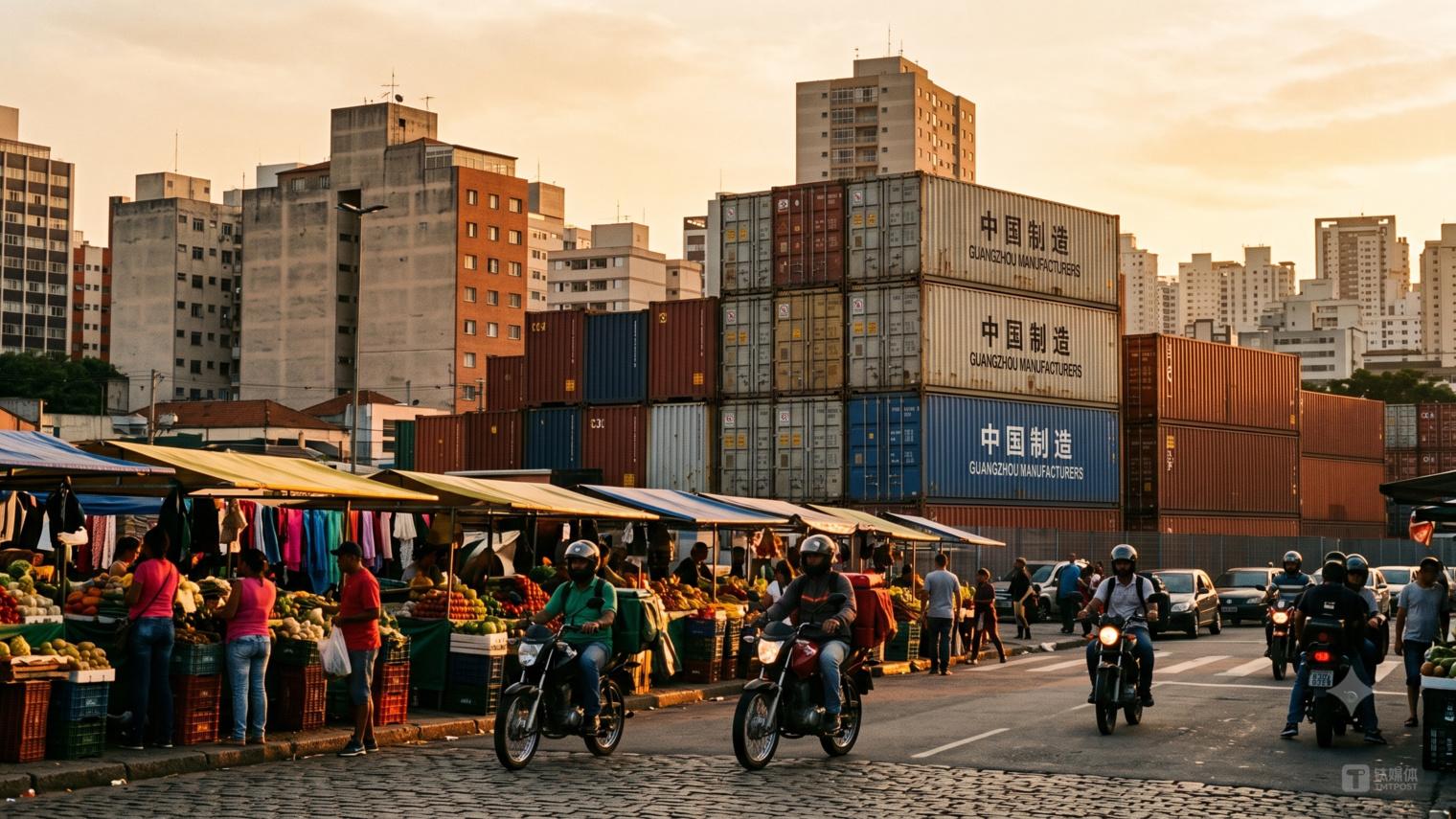
NextFin News — “A lot of Chinese people in Brazil have bulletproof glass installed on their cars.” That was the one thing Enki Technology founder Cheng Hai remembered most vividly from his recently concluded fact-finding trip to Brazil.
Public safety concerns are one of the stereotypes outsiders often hold about Latin America. But in Cheng Hai’s view, that stereotype is only skin-deep. He spent two weeks in Brazil without running into any safety issues at all—what boosted his confidence instead was the rapidly growing local demand for e-commerce.
After entering the Brazilian market in the first half of this year, Enki Technology used a distribution-heavy model to drive monthly revenue up 15-fold, while net profit margins have consistently held at 30%.
“If you’re doing legitimate business, what are you afraid of?” he shot back. “As long as you pay taxes locally and hire people, you’re valuable to the local government—and they’ll want you to come.”
This confidence isn’t unfounded. Amazon data showed that in the first quarter of this year, sales generated by new sellers in Brazil and Mexico were up 2x year-on-year versus new sellers last year; during Mexico’s Hot Sale campaign this year, new-seller sales were 4x the same period last year.
Zhang Qi, Vice President of Amazon China and Head of Emerging Markets for Amazon Global Selling, told Chuhai Cankao, “Mexico’s e-commerce penetration rate is expected to surpass the U.S. for the first time this year.”
At the policy level, signals have been equally encouraging. In May this year, the Brazilian government announced it would eliminate the 20% federal import tax on small parcels under US$50, and cut the tax rate on goods over US$50 but no more than US$3,000 from 60% to 30%.
Against the broader global backdrop of tightening policies on cross-border small parcels, Brazil has embraced cross-border e-commerce with a rare openness. This continent—China’s farthest—has become a blue-ocean market whose “potential is far beyond expectations.”
Surprise: 6x Growth on Day One
“Latin America is our fastest-growing overseas market,” Yuan Weigui, Head of Overseas E-commerce at IMOU (Lechange), told Chuhai Cankao.
Lechange is a consumer security company that was spun off from Dahua Technology, a major player in the security industry. In 2018, Lechange expanded overseas under the IMOU brand and entered the global market. Driven by the rapid growth of Latin America, IMOU Lechange’s overseas shipments accounted for as much as 77.1% in the first quarter of 2025.
After several years of operations, Yuan Weigui observed that last-mile logistics fulfillment for Latin American e-commerce is smoother, mobile payments are widely adopted, and consumers’ willingness to shop online is rising—making the local e-commerce environment increasingly favorable.”
She revealed, “Latin America has maintained high growth momentum over the past few years. During this year’s Prime Day campaign, IMOU’s first-day sales increased sixfold, which really showed us the strong consumption potential of the Mexican market.”
Zhang Qi summed up merchants’ common feedback after entering Latin America with the word “surprise.” “Some products feel like they’re doing well when they sell 10 units on a normal day, but during major promotions they can suddenly surge to 40 or 50 units. That kind of explosive growth makes people realize the opportunity here is bigger than they expected.”
In her view, many people mistakenly think that as more players enter, the pie gets sliced thinner. But Latin America is still in an incremental-growth phase: e-commerce penetration is rising quickly and the demographic dividend continues to be released. With more entrants, everyone can actually share in the dividends brought by overall market expansion.
As a distribution-style seller, Cheng Hai feels this “surprise” even more directly. Enji Technology entered Brazil this January, and its GMV has been doubling month over month; the return rate has held at around 3%, and net profit has remained at 30%. He noted that there still aren’t that many merchants in Brazil, and the market is still in a supply-short stage—so the distribution model is still working.
Yuan Weigui likewise believes a price war has not yet emerged in Latin America. She told us, “In any market, over time it’s inevitable to move into price wars and intense competition. But Latin America hasn’t reached its peak yet—it’s still in a phase of rapid development.” This has allowed IMOU to maintain mid-to-high-end brand pricing and profit margins, without having to throw off its rhythm just to chase volume.
GameSir, the game controller brand, has also felt this wave of momentum. During this year’s World Cup, the excitement around the matches directly boosted sales of related gaming peripherals.
According to data from the Mercado Libre platform, during the World Cup period Brazil saw more than 2.2 million searches for smart TVs; searches for green spray paint products jumped 642%; non-alcohol beer searches surged 985%. In Mexico, searches for portable ice buckets rose as high as 492%. The entire consumer market was heating up along with fans’ эмоtions.
However, Latin America is by no means a monolith. Zhao Weilin, COO of GameSir, specifically noted: “In price-sensitive Latin American markets, consumer behavior in Mexico is very close to that of the U.S., but Brazil is even more price-sensitive and has a more segmented consumer base.”
This divergence shows up directly in product strategy and user segmentation. For GameSir, whose core products are mobile gaming controllers, Mexico is instead a market where it pushes Xbox-licensed controllers as the main offering, with other mobile-game and PC-gaming products as complements; in Brazil, it places more emphasis on highly compatible PC controllers and mobile controllers, aligning with the local preference for mobile-first gaming.
A 165-day Cash-collection Cycle
On the flip side of the pleasant surprises are the very real operational challenges—especially in Brazil.
“In the past, localization wasn’t necessary. Now it’s required—registering a local company, applying for a local tax ID, stocking inventory locally. That threshold has kept many small sellers who just wanted to test the waters out,” Zhao Weilin analyzed.
Holding inventory locally has become standard practice for cross-border e-commerce in Brazil. GameSir, IMOU, and Enji Technology have all opted to stock goods in local Brazilian warehouses. But behind the cost of inventory, the tougher problem to untangle is the supply-chain management and cash-flow pressure caused by long-haul ocean shipping.
It takes 60 days for a factory to produce a batch of goods; shipping from China to Brazil by sea takes 30–45 days; customs clearance takes 2 weeks to a month; and it takes another month to sell through the batch. All told, it takes 165 days before the payment for that batch shows up on the books.
Goods stuck at sea, and products piled up in overseas warehouses still awaiting clearance, once left both merchants and local consumers anxious. Many merchants told us they were “robbing Peter to pay Paul.”
Zhao Weilin also admitted, “By stretching out our inventory cycle in Brazil, we didn’t manage to fully plug the hole until the second quarter of this year.”
Cheng Hai ran a more detailed calculation from another angle: for the same shipment to Brazil, a fast vessel can arrive in about 28 days, with clearance completed in roughly a month—but it costs about five percentage points more than slow shipping. Choosing the cheaper slow vessel can save a few points in freight, but the cargo can end up stuck at sea for as long as two months, leaving capital tied up in transit and unable to move.
“If your cash is tight and you need to get in and start selling fast to generate income, the interest cost of that extra delay may end up higher than the few points you pay for a fast ship,” Cheng Hai explained to Going Global Reference.
For large sellers with ample capital, this is a choice that can be calmly modeled; for small and mid-sized sellers, it often determines survival.
After-sales service is another invisible money pit. Zhao Weilin said that Brazil currently lacks a mature after-sales system; returned goods can only be handled in tiers through local warehouses—items that can be fixed are repaired, and those that can’t are written off. To keep after-sales costs under control and reduce the return rate, GameSir has tried to head off return issues in advance by strengthening product testing, addressing the joystick-drift pain point, improving order-fulfillment timeliness, and increasing interaction and communication within its user communities.
Certification, taxes, and hiring are also three hard hurdles in Brazil.
Certification for electronic products in Brazil typically takes three to four months—much slower than in markets such as Europe and the United States—stretching out the time-to-market for new products. Brazil also has three separate layers of taxation—federal, state, and municipal; moving goods across state lines incurs at least a 4% circulation tax, which passively raises the bar for capabilities such as tax and financial compliance, pricing strategy, and profit accounting. The Brazilian government also requires that the proportion of locally hired employees must not be lower than two-thirds. A high “Brazilianization rate,” combined with strict local labor-protection laws, means higher labor and workforce-management costs for companies.
The complexity of tax laws has limited many sellers’ operational reach in Brazil. Cheng Hai revealed that, like many other sellers, Enki Tech’s market operations in Brazil were limited to the São Paulo area, covering a population of 20 million; the broader inland market has always been a tough nut to crack.
“The rougher the seas, the pricier the fish.” That’s how Zhao Weilin summed up the paradox of high risk and high reward in the Brazilian market. He suggested that new sellers entering Brazil “be prepared for at least two to three years of long-term investment and patience,” learn how the Brazilian market works, and push through the stage of plugging holes.
Precisely because the barriers are high and compliance costs are steep, there still aren’t many players truly rooted in Brazil—ironically leaving room for brands willing to grind through the hole-plugging phase.
A One-Year Window: Chinese Brands and Mindshare in Latin America
As a distribution-style seller, Cheng Hai believed investments in Brazil can deliver immediate results, but as more and more merchants pour in, this window of dividend opportunity can only last for one year.
“At this stage, distribution still works and there’s still profit. A year from now, we’ll have to return to the track of premium, curated offerings and brand-building.” Drawing on his past experience opening up the Middle East and half a year operating in Brazil, Cheng Hai offered his outlook for the Brazilian market.
This window is not only for distribution-style sellers; it is also the window for brand merchants to build user mindshare in Brazil.
Zhao Weilin said, “Relying on the brand awareness GameSir built up in the U.S. market, our in-platform brand-search conversion rate can reach 10%. But in Brazil, brand awareness and identification haven’t taken shape yet, so we still have to rely on off-platform conversion.”
However, he believes this is precisely an opportunity for Chinese companies to build brand awareness in Latin America. Behind that opportunity lies a crucial difference. Zhao Weilin has observed that consumers in Europe and the United States tend to be highly loyal to legacy brands, whereas consumers in emerging markets such as Latin America and India don’t have that kind of attachment. Instead, they are more willing to embrace new and different brands—giving Chinese brands a comparatively level playing field at the starting line.
In this golden window for shaping brand mindshare, both IMOU and GameSir are trying—through localized products and marketing—to define the standard in their respective tracks and capture mindshare.
IMOU has found that in Latin America, more families live in self-built homes, and outdoor “home guarding” is a typical need. Consumers want multi-angle, long-range monitoring solutions to cover wider and larger spaces. In response, IMOU has tailored dual-camera and multi-camera solutions and launched security cameras that charge via solar power and support 24/7 uninterrupted operation. At the same time, to address storage overload caused by long-duration monitoring, IMOU compresses video files to reduce storage usage.
GameSir’s way of seizing this window has been localization in the truest sense.
One product detail illustrates the point well. A controller GameSir launched recently, the “P1,” was named based on a suggestion from community users: “Call it Taco—the product looks a lot like a taco.” Naming a product after a Mexican food reflects a level of trust that can only be built through deep communication with local users.
In addition, GameSir has partnered with local gaming KOLs in Mexico and Brazil to break into different communities. Leveraging Latin America’s strong sharing culture and love of social media, GameSir stays in close, in-depth contact with local users through private social-media communities. At the same time, it has bet on mobile gaming controller products, aligning with the trend in Latin America of skipping the PC era and embracing the mobile internet directly.
As overseas-expanding brands, IMOU and GameSir treat offline investment as just as important as online. Zhao Weilin noted that GameSir recently attended an industry trade show in Brazil and, together with local distributors, placed outdoor advertising. IMOU, meanwhile, has developed online and offline channels in parallel since it began its overseas expansion in 2018—and in places such as Venezuela and Colombia, it has even chosen to rely exclusively on offline channels.
Notably, in pricing, both IMOU and GameSir have maintained a mid-to-high-end brand positioning. As more Chinese brand-oriented sellers that succeeded in the United States enter Latin America, the globalization of “Made in China” is upgrading into the globalization of mid-to-high-end “Chinese brands.”
At the end of the visit, Zhang Qi summed it up for us: “Right now, Chinese cross-border sellers in Latin America are seeing two parallel trends. On the one hand, ultra cost-effective products that leverage China’s supply-chain advantages are continuing to gain momentum in the Latin American market; on the other hand, more and more Chinese brands are incorporating high-potential markets such as Latin America into their globalization strategy from the very start.”
Wholesale-listing sellers make money before they finish plugging the holes; brand merchants put down roots before the market fully matures. On this land that is farthest from China yet closest to opportunity, cross-border e-commerce seems to have found the last “Promised Land flowing with milk and honey.” (Author | Wang Lu)
#Pitfalls #Profits #Latin #America #CrossBorder #ECommerce钛媒体官方网站